Understand the communication style of MBTI type 16 personality in the workplace, master the differences in the four dimensions of E/I, S/N, T/F, and J/P, learn team meetings, project collaboration, conflict handling and feedback skills, and help employees, managers and HR build efficient teams.
MBTI Teamwork: A Guide to Communication Styles and Effective Collaboration for Different Personality Types
In a team, some people are accustomed to getting straight to the point and expressing their opinions quickly; others are more willing to listen first and express their opinions after full consideration. Some people focus on task progress, execution efficiency and final results, while others care more about team atmosphere, member feelings and relationships with each other.
For the same work, some people want to first clarify the goals, assign tasks, and then gradually advance; some people prefer to explore different possibilities during discussions and flexibly adjust according to the actual situation.
These differences do not necessarily mean who is more professional or better, but may reflect different personality preferences and information processing styles.
In the workplace, communication barriers among team members are sometimes not due to lack of professional ability or someone's unwillingness to cooperate, but because everyone is accustomed to using different communication methods without realizing their differences.
The MBTI (Myers-Briggs Type Indicator) provides a framework for understanding personality preferences and communication differences. By understanding the communication tendencies of different MBTI types, employees can better understand their colleagues, managers can improve team collaboration, and HR can also use personality differences as a reference for organizational communication and team building.
This article will start from the four dimensions of MBTI, systematically analyze the communication styles of 16 personality types in the workplace, and provide actionable communication suggestions based on actual scenarios such as meetings, project collaboration, conflict handling, feedback and team management.
1. Why is MBTI related to workplace teamwork?
Teamwork depends not only on each person's professional skills, but also on how members exchange information, express opinions, understand needs, and handle disagreements.
In actual work, common communication problems include:
- The communication rhythm is different: some people want to discuss and determine the plan immediately, while others need to think independently before giving mature opinions.
- Information focuses on different things: some people focus on specific data, implementation steps, and realistic conditions, while others focus more on the overall direction, potential opportunities, and future possibilities.
- Decisions are based on different bases: some prioritize logic, efficiency, and objective criteria, while others place more emphasis on team feeling, fairness, and interpersonal impact.
- Work is organized in different ways: some prefer clear plans, timetables and division of responsibilities, while others are more accustomed to retaining flexibility and adjusting actions according to changes.
- Conflicts are handled in different ways: some prefer to point out the problem directly, while others want to deescalate the situation first and then find a mutually acceptable solution.
These differences, if not understood, can easily lead to misunderstandings.
For example:
An employee who rarely speaks proactively in meetings may be mistaken for a lack of participation, but in fact he may need more time to organize his thoughts.
A manager who constantly presses about project progress may be considered too pushy, but he may simply want clear information so that project risks can be controlled.
A colleague who continually discusses new possibilities when proposing a solution may be perceived as lacking focus, but he may be looking for a better solution by exploring different directions.
Therefore, the value of understanding personality differences is not to label colleagues, but to help teams realize that different people may need different ways of expressing information, communication rhythms, and collaborative environments.
The four core dimensions of the MBTI
The MBTI divides personality preferences into four sets of dimensions, each containing two opposing tendencies. The four dimensions are combined to form 16 personality types.
| Dimensions | Preference | Typical behavior in the workplace |
|---|---|---|
| energy source | E extroversion / I introversion | Do you prefer to organize your thoughts through interactive communication or independent thinking? |
| information acquisition | S Reality / N Intuition | Should you pay more attention to factual details or overall trends and possibilities? |
| decision-making style | T thinking / F feeling | Should we pay more attention to logical standards or values and interpersonal influence? |
| life organization | J Judgment/P Perception | Do you prefer planning and certainty, or flexibility and openness? |
It is important to note that the MBTI describes preferences, not abilities, intelligence, expertise, or job performance.
For example, introverted employees do not mean that they are not good at communication, and extroverted employees do not necessarily mean that they are better at teamwork; thinking employees do not mean that they lack empathy, and emotional employees do not mean that they lack logic.
These dimensions are better suited for understanding how a person generally tends to communicate rather than predicting a person's specific behavior in all work situations.
If you don’t know your MBTI type yet, you can take an assessment through the PsycTest Quiz MBTI Personality Test Center to get a preliminary understanding of your preferences in the four dimensions.
2. The impact of the four dimensions of MBTI on workplace communication style
1. Extroversion E and Introversion I: Interaction needs in communication
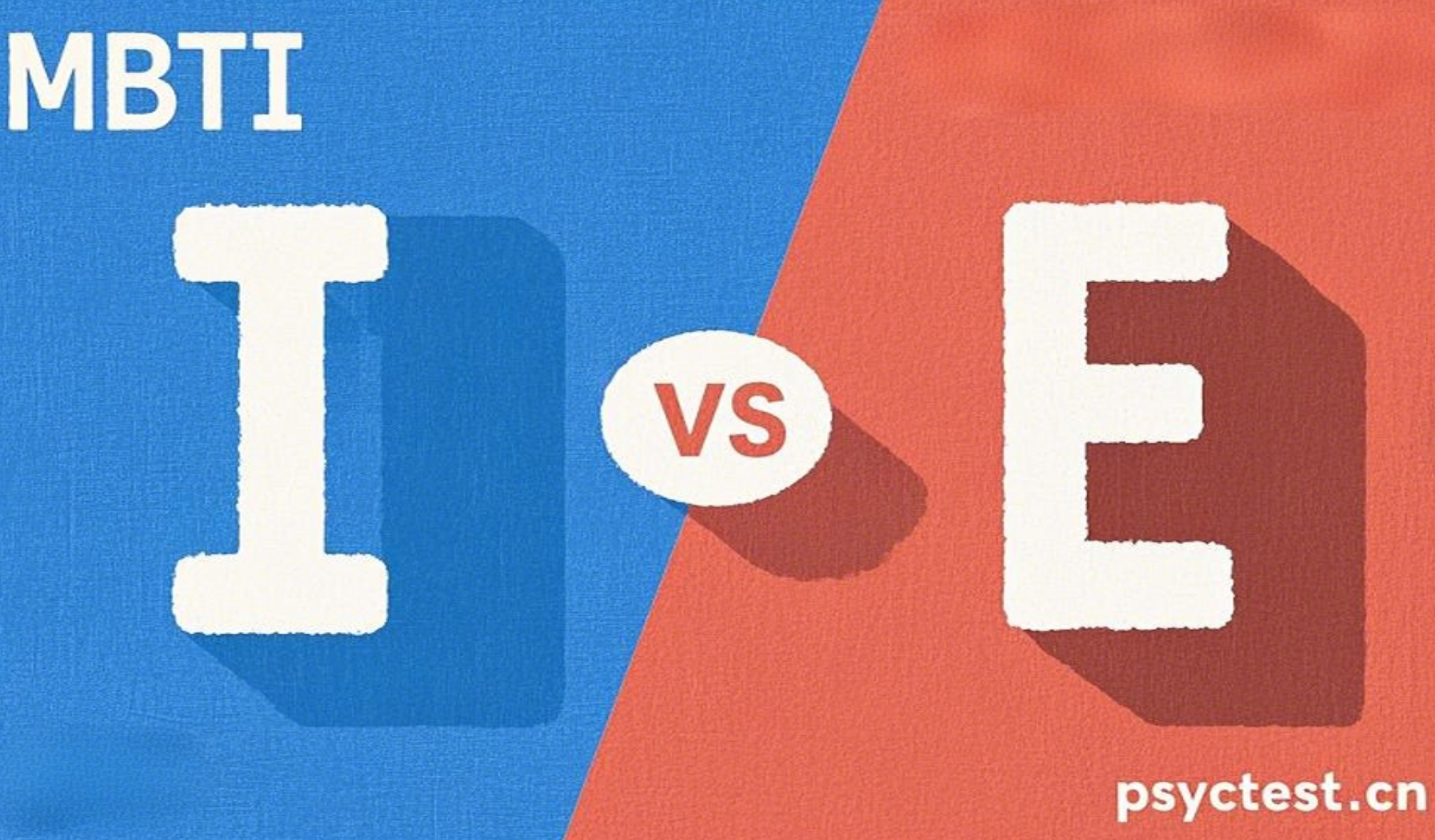
E (Extraversion) and I (Introversion) reflect an individual's preferences in energy allocation and interaction with the outside world.
In team collaboration, one of the most obvious differences between the two is the habit of forming and expressing ideas.
Extroversion (E): Tends to organize ideas through communication
People with extroversion tendencies are generally more likely to develop ideas through discussion, interaction, and immediate feedback.
Typical communication performance:
- Likes to initiate conversations and is more likely to express opinions in meetings.
- I tend to think while discussing and improve the plan through communication.
- Generally positive about immediate feedback and team interaction.
- It is easier to establish working contacts through verbal communication.
- When faced with an open discussion, multiple points of view may be proactively presented.
Collaboration suggestions:
When communicating with E-type members, you can appropriately increase interaction opportunities and allow them to participate in brainstorming, solution discussions and cross-department exchanges.
But managers also need to pay attention to controlling the pace of discussions to prevent a few positive members from taking up too much speaking time.
Introversion (I): Tends to think first and express opinions later
Introverts usually prefer to organize information in a relatively quiet environment and express their opinions after thorough consideration.
Typical communication performance:
- Prefer to know the meeting topics in advance.
- Like to express opinions after independent thinking.
- Usually more suitable for one-on-one or small-scale in-depth communication.
- May dislike frequent on-the-fly discussions and impromptu interruptions.
- Prefer to express organized opinions through words, documents, etc.
Collaboration suggestions:
When communicating with Type I members, you can send meeting agendas, discussion materials, and issues requiring decision-making in advance.
For important topics, you can give them a certain amount of time to think and allow them to add comments through post-meeting documents.
Don’t judge a person’s participation or work contribution solely by the number of times they speak in a meeting.
2. Sensing type S and intuitive type N: ways of expressing and understanding information
S (Sensing) and N (Intuition) reflect an individual's preference for obtaining and understanding information.
In the workplace, this difference often manifests itself as: some people want to know exactly how to do something, while others want to know why something is done in the first place.
Realistic Type (S): Focus on facts, details and practical operations
Typical communication performance:
- Prefer specific, clear, fact-based information.
- Pay attention to data, cases, practical experience and implementation steps.
- Pay more attention to current conditions, resource constraints and practical issues.
- You may not be interested enough in solutions that are too abstract or lack implementation paths.
- Tends to judge work progress through concrete results.
Collaboration suggestions:
When communicating with S-type members, try to provide:
- Clear project goals and task requirements.
- Verifiable data and actual cases.
- Specific execution steps and time nodes.
- Resource requirements, risks and implementation conditions.
For example, instead of saying 'We want to comprehensively optimize the user experience', it is better to say 'This week we will optimize the registration process, reduce the registration steps from five steps to three steps, and track the changes in conversion rates.'
Intuitive (N): Focused on overall direction, connections, and future possibilities
Typical communication performance:
- Like to discuss overall strategy, development trends and innovation directions.
- Good at finding connections between different information.
- Typically open to new ideas and different solutions.
- Tend to focus on long-term value, not just immediate tasks.
- Possibilities beyond the scope of the current project are sometimes brought up in discussions.
Collaboration suggestions:
When communicating with N-type members, you can first explain the project background, core issues and long-term goals, and then discuss specific implementation arrangements.
Give them appropriate space to explore, let them come up with innovative ideas, and at the same time transform ideas into executable tasks through phased goals.
3. Thinking T and Feeling F: decision-making and feedback styles
T (Thinking) and F (Feeling) reflect the standards that individuals tend to use when making judgments and decisions.
This is not a simple opposition between rationality and sensibility, but a difference in factors of concern when making decisions.
Thinking type (T): Prioritizes logic, fairness and objective standards
Typical communication performance:
- Like to discuss the issue itself directly.
- Value arguments, logical consistency, and objective standards.
- Tends to distinguish between facts, opinions, and personal feelings.
- More willing to analyze the causes and find solutions when faced with problems.
- Usually able to accept direct input and constructive criticism.
Collaboration suggestions:
When communicating with T-shaped members, you can clearly state the problem, data, basis for judgment, and expected results.
Try to pinpoint specific issues in your feedback rather than using vague comments.
For example:
'The data sources of this report are inconsistent, resulting in the conclusion in the third part not being supported by the previous data. It is recommended to recalculate after unifying the statistical caliber.'
Emotional type (F): Emphasis on values, interpersonal relationships and decision-making influence
Typical communication performance:
- Pay more attention to the impact of communication on others.
- Value team atmosphere, respect and mutual understanding.
- Members' actual feelings may be taken into account when making decisions.
- Tends to build consensus by understanding the other person's position.
- May be sensitive to lack of respect or overly stiff communication styles.
Collaboration suggestions:
When communicating with F-type members, in addition to explaining tasks and results, you can also pay appropriate attention to the members' feelings and concerns behind them.
When offering criticism, you can first acknowledge the other person's input before discussing specific issues and ways to improve.
For example:
'It can be seen that you have invested a lot of energy in this plan. There are currently two areas that need to be adjusted. We can work together to see how to modify it, so as to retain the original ideas and meet the project requirements.'
4. Judging type J and perceiving type P: work arrangement and collaboration rhythm
J (Judging) and P (Perceiving) reflect an individual's preference for planning, certainty and flexibility when dealing with external affairs.
In project collaboration, this difference often leads to friction in scheduling and work styles.
Judging (J): Prefers planning, order, and clear results
Typical communication performance:
- Like to determine meeting arrangements and work plans in advance.
- Value clear deadlines, responsibilities, and delivery standards.
- Hope to get timely feedback on project progress.
- Tends to make decisions early and move forward with execution.
- May feel uncomfortable with repeated changing demands and unclear arrangements.
Collaboration suggestions:
When working with J-shaped members, try to clarify the division of tasks, time points and acceptance criteria.
If the project needs to be adjusted, the reasons, scope of impact, and new arrangements should be explained in a timely manner.
Perception type (P): prefers flexibility, exploration and flexible adjustment
Typical communication performance:
- Like to retain a certain degree of autonomy in work.
- It is generally easier to adapt to open-ended tasks and temporary changes.
- Tends to constantly explore better solutions during execution.
- Don’t necessarily like to nail down all the details too early.
- May focus on completing tasks near deadlines.
Collaboration suggestions:
When working with P-shaped members, you can clarify the final goals and unchangeable key nodes, while retaining a certain degree of execution flexibility.
For tasks that require exploration and innovation, there is no need to limit all details prematurely.
But flexibility does not mean no responsibility. The team still needs to clearly define delivery deadlines and minimum quality standards.
Understand your four-dimensional preferences through the MBTI test
If you want to further understand your own tendencies in the four dimensions of extroversion and introversion, sensing and intuition, thinking and emotion, and judgment and perception, you can choose MBTI assessments of different depths.
- 12-question quick version of the MBTI test (about 3 minutes) : suitable for quickly understanding your preliminary type.
- 72-question classic MBTI test (about 10 minutes) : Suitable for users who want to get a more complete assessment experience and understand preferences in the four dimensions.
Test results can be used as a reference for self-observation, and specific workplace communication methods need to be understood based on personal experience and actual behavior.
3. Workplace communication styles of MBTI 16 personality types
The four dimensions combine to form 16 personality types. Although different individuals of the same type will also be affected by their growth environment, work experience, professional background and organizational culture, MBTI can help us initially understand the communication methods they may prefer.
The following analysis focuses on common tendencies in the workplace rather than fixed definitions for all types of workers.
1. Analyst type (NT): rational analysis and strategic thinking
Analyst types include INTJ, INTP, ENTJ, and ENTP.
These four types usually have a strong preference for abstract analysis and conceptual thinking, and may pay more attention to the logic behind the problem, the system structure, and the effectiveness of the solution at work.
INTJ: Strategic Planner
Communication style: rational, independent, goal-oriented, focusing on long-term planning.
INTJs generally prefer to understand the overall problem before constructing a systemic solution.
In team communication, they may be less fond of discussions that lack purpose and would rather exchange views around core issues.
Common manifestations:
- Prefer logical and structured communication.
- Tends to prepare ideas and solutions in advance.
- Focus on long-term planning and execution efficiency.
- I don't like to rehash issues that have already been discussed.
- May directly point out logical loopholes in the plan.
Collaboration suggestions:
When communicating with an INTJ, it's best to discuss your goals clearly in advance and provide sufficient background information.
If you need to convince them, the focus should be on arguments, logic, and feasibility of the solution.
Managers can give them a certain amount of independent decision-making space while ensuring that important decisions are synchronized to the team in a timely manner.
INTP: Logical Explorer
Communication style: Analytical, exploratory, objective, focusing on conceptual accuracy.
INTPs usually like to study the essence of problems and tend to analyze complex problems from different perspectives.
They may raise many hypotheses and questions in the discussion and constantly test their original ideas.
Common manifestations:
- Likes to analyze problems in depth.
- Sensitive to logical contradictions and imprecise arguments.
- Tends to explore solutions through asking questions.
- May be more invested in open technical discussions and knowledge exchange.
- Sometimes overanalyzing leads to slower decision-making.
Collaboration suggestions:
Give the INTP enough space to think independently while setting clear boundaries for exploration.
During the project, you can leave complex issues to them for analysis, but you need to agree on the analysis deadline and decision-making nodes to avoid endless extension of the discussion.
ENTJ: Goal-Driven Organizer
Communication style: direct, decisive, efficient, emphasizing results.
ENTJs typically tend to quickly identify problems, determine direction, and organize resources to drive execution.
In a team, they may be more willing to proactively take on organizational and decision-making responsibilities.
Common manifestations:
- Like to express opinions directly.
- Focus on efficiency, execution and end results.
- Good at organizing discussions and driving decisions.
- May lack patience for delays and ineffective communication.
- The opinions or emotions of other members may sometimes be ignored.
Collaboration suggestions:
When communicating with ENTJs, try to highlight core issues, key data, and solutions.
If you disagree with a decision, prepare a solid argument rather than just expressing disagreement.
At the same time, ENTJs also need to take the initiative to leave space for listening to prevent team communication from turning into one-way instruction transmission.
ENTP: Innovative Explorer
Communication style: Flexible, active, good at debating, and likes to challenge traditional views.
ENTPs generally enjoy exploring different possibilities and stimulating new ideas through discussion, questioning, and the collision of ideas.
Common manifestations:
- Enjoy brainstorming and open discussions.
- Be willing to challenge existing solutions.
- Ability to quickly come up with different solutions.
- May show high interest in innovative projects and complex problems.
- Sometimes it is easy to start too many ideas at the same time and lack continuous follow-up.
Collaboration suggestions:
Involve ENTPs in innovation discussions and program design, but need to clarify priorities, responsibilities, and action plans after the discussions.
Don’t interpret every objection they raise as a denial or a provocation, many times it may just be a way for them to explore the issue.
2. Diplomat type (NF): value identification and interpersonal understanding
Diplomat types include INFJ, INFP, ENFJ, and ENFP.
These four types usually focus more on human value, development potential, and the meaning behind actions, and may place more emphasis on understanding, consensus, and interpersonal influence in team communication.
INFJ: Insightful Facilitator
Communication style: Deep, careful, insightful, and meaning-oriented.
INFJs generally tend to understand the overall context and other people's positions before expressing their own judgment.
Common manifestations:
- I like in-depth and purposeful communication.
- Good at paying attention to information that is not directly expressed in communication.
- Value trust among team members.
- Prefer quality one-on-one communication.
- Sometimes expressing disagreement may be delayed due to concerns about relationships.
Collaboration suggestions:
When communicating with INFJs, you should be honest and respectful, and avoid overly superficial communications.
For important issues, they can be given the opportunity to fully express their views, and they should also be encouraged to put forward different opinions in a timely manner.
INFP: Value-oriented idealist
Communication style: sincerity, gentleness, emphasis on personal value and inner identity.
INFPs usually pay more attention to whether their work is in line with their personal values and whether their ideas are respected.
Common manifestations:
- Value sincerity and mutual respect.
- Likes to express opinions of personal significance.
- May be sensitive to unfair or disrespectful communication methods.
- Tends to understand different members' positions.
- There may be a reluctance to engage directly in intense conflict at times.
Collaboration suggestions:
When communicating with an INFP, avoid using humiliating or overly forceful expressions.
When assigning tasks, explain the purpose of the work and its value so they understand why the work is important.
At the same time, the team also needs to help them transform their ideals and ideas into concrete execution plans.
ENFJ: Team Bonder
Communication style: Positive, infectious, good at coordination, and emphasis on member development.
ENFJs usually value team relationships and collective goals, and may take the initiative to promote communication and cooperation among members.
Common manifestations:
- Good at organizing team discussions.
- Pay attention to members’ emotions and engagement.
- Be willing to encourage others to express their opinions.
- Pay attention to team consensus and cooperative atmosphere.
- May sometimes take too much coordination responsibility and neglect its own needs.
Collaboration suggestions:
ENFJs can be involved in team coordination, cross-department communication, and member coaching.
But you need to avoid putting all the emotional coordination work on them and encourage them to express their positions directly when necessary.
ENFP: Passionate creative promoter
Communication style: open, enthusiastic, imaginative, and inspiring.
ENFPs typically enjoy exploring new ideas through communication and show a high level of enthusiasm for interesting, meaningful work.
Common manifestations:
- Be willing to participate in team discussions.
- Good at discovering new opportunities and possibilities.
- Easily promote team atmosphere through positive communication.
- May be less interested in communications that are repetitive and lack variety.
- Sometimes it is possible to focus on too many directions at the same time, causing the focus to be scattered.
Collaboration suggestions:
Give ENFPs some room to innovate and allow them to come up with different solutions.
At the same time, clear staged goals and task lists help them focus and ensure that their ideas can be implemented.
3. Guardian type (SJ): sense of responsibility and execution of order
Guardian types include ISTJ, ISFJ, ESTJ, and ESFJ.
These four types usually pay more attention to realistic conditions, work responsibilities, specific processes and team order, and may pay more attention to stability and enforceability in organizational management and daily collaboration.
ISTJ: Rigorous performer
Communication style: pragmatic, rigorous, objective, and fact-oriented.
ISTJs generally prefer to move forward with tasks through clear information and reliable work processes.
Common manifestations:
- Prefer specific and accurate communication.
- Value commitment, responsibility and timing.
- Tends to judge issues based on facts and past experience.
- Don't like frequent changes to established plans.
- May lack patience for vague task requirements.
Collaboration suggestions:
When communicating with ISTJs, provide clear task descriptions, delivery standards, and timelines.
If plans need to be changed, notification should be given as far in advance as possible and the basis for adjustments should be explained.
ISFJ: Meticulous Supporter
Communication style: gentle, patient, meticulous, and focused on practical needs.
ISFJs usually pay more attention to the specific needs of team members and the details that are easily overlooked in daily work.
Common manifestations:
- Be good at listening and being supportive.
- Value stability and responsibility at work.
- Pay attention to other people's practical difficulties.
- Prefers clear, friendly communication.
- Can sometimes be bad at saying no to extra tasks.
Collaboration suggestions:
When working with an ISFJ, prioritize tasks to avoid adding to the workload just because they want to help others.
They should be given specific and timely recognition for their contributions.
ESTJ: Effective Management Facilitator
Communication style: direct, pragmatic, highly organized, emphasizing efficiency.
ESTJs usually value goals, rules, and work execution, and may tend to take the initiative in organizing tasks and pushing the team to accomplish goals.
Common manifestations:
- Prefers clear instructions and division of labor.
- Focus on progress, efficiency and results.
- Good at establishing processes and managing execution.
- Tends to point out problems directly.
- Sometimes it is possible to focus too much on rules and efficiency and ignore individual differences.
Collaboration suggestions:
When communicating with an ESTJ, the focus should be on task status, practical problems, and solutions.
When managing a team, you also need to pay attention to distinguishing between reasonable process management and excessive control, so as to retain the necessary autonomy for members.
ESFJ: Relationship Facilitator
Communication style: Friendly, positive, focusing on cooperation and team relations.
ESFJs usually pay more attention to the team atmosphere and interactions between members, and may take the initiative to maintain cooperative relationships.
Common manifestations:
- Willing to proactively communicate and help colleagues.
- Emphasis on team identity.
- Good at organizing group activities and coordinating work.
- Relatively sensitive to changes in relationships among members.
- Sometimes you may care too much about other people's opinions.
Collaboration suggestions:
When working with an ESFJ, maintain an open and friendly communication style and keep abreast of work changes.
For decisions involving team adjustments, the reasons and impacts should be explained as much as possible to reduce unnecessary misunderstandings.
4. Explorer Type (SP): Flexibility and practical action
Explorer types include ISTP, ISFP, ESTP and ESFP.
These four types usually pay more attention to the real environment, specific experience and actual actions, and may show different advantages in work scenarios that change quickly and require flexible response.
ISTP: Calm problem solver
Communication style: concise, independent, pragmatic, focusing on practical issues.
ISTPs generally prefer to understand problems through observation and analysis, and to find immediate and effective solutions.
Common manifestations:
- Don't like too much irrelevant information.
- Focus more on the problem itself rather than formal discussion.
- Tends to solve specific problems independently.
- May be more involved in technical troubleshooting and practical operation discussions.
- Sometimes he doesn't take the initiative to express his thinking process.
Collaboration suggestions:
When communicating with an ISTP, try to be direct about the problem, goals, and constraints.
Give them a certain amount of independent processing space, while clarifying key progress and collaboration interfaces.
ISFP: Flexible Practitioner
Communication style: Gentle, authentic, experience-oriented, and tends to avoid tough conflicts.
ISFPs are often more concerned with practical feelings and personal values, and may prefer a natural, egalitarian style of communication.
Common manifestations:
- Don't like overly formalized communication.
- Value personal space and autonomy.
- Tends to show support through practical actions.
- May be sensitive to strong accusations.
- Sometimes unwilling to take the initiative to express dissatisfaction.
Collaboration suggestions:
When working with ISFPs, try to use equal and respectful communication methods.
Provide specific suggestions for areas for improvement and allow them to express their actual experience.
ESTP: Practitioner of fast action
Communication style: Direct, flexible, responsive, and focused on realistic results.
ESTPs generally tend to quickly understand situations on the ground and take action to solve problems.
Common manifestations:
- Prefers direct communication and quick feedback.
- Good at handling emergencies.
- Focus on practical results and real-world opportunities.
- I don't really like lengthy theoretical discussions.
- Long-term planning and potential risks can sometimes be underestimated.
Collaboration suggestions:
When communicating with ESTP, you can quickly get to the core issue and provide clear action goals.
For decisions involving long-term implications, risk analysis and necessary written records should be supplemented.
ESFP: Active team player
Communication style: Enthusiastic, active, friendly, and focused on interactive experience.
ESFPs generally enjoy interacting with others and may enhance their sense of team participation through positive interactions.
Common manifestations:
- Good at establishing a relaxed communication atmosphere.
- Love getting feedback in a timely manner.
- Tends to focus on the actual situation at hand.
- Willing to participate in work that requires interaction and on-the-spot response.
- Sometimes you may not like long-term, complex planning arrangements.
Collaboration suggestions:
Use concrete examples and interactive discussions when communicating with ESFPs.
Help them keep moving forward with clear short-term goals, staged feedback, and visible results.
4. MBTI 16 Personality Workplace Communication Styles Cheat Sheet
The table below can help employees, HR, and managers quickly understand different types of communications that may be preferred.
| MBTI type | Main communication tendency | A more suitable way of communication | Things to note |
|---|---|---|---|
| INTJ | Strategy, logic, goal orientation | Structured discussion and sufficient arguments | Avoid communication that lacks purpose |
| INTP | Analyze, explore, think independently | In-depth discussions and problem analysis | Clear decision-making deadlines |
| ENTJ | Direct, decisive and results-oriented | Core information and action plan | Make space to listen |
| ENTP | Innovation, debate, open exploration | Brainstorming and exchanging ideas | Control the scope of discussion |
| INFJ | Deep, cautious, and focused on understanding | One-to-one, full expression | Prompt objections are encouraged |
| INFP | Sincerity, gentleness, value orientation | Respectful communication and meaning explanation | Avoid vague task requirements |
| ENFJ | Active, coordinated and focused on members | Team discussion, two-way feedback | Avoid overburdening yourself with coordination tasks |
| ENFP | Open, enthusiastic and creative | Interactive discussions and innovative exchanges | Clear priorities |
| ISTJ | Rigorous, pragmatic and focused on responsibility | Facts, processes, clear standards | Communicate plan changes in advance |
| ISFJ | Detailed, patient and supportive | Friendly communication and concrete recognition | Avoid continuing to add hidden tasks |
| ESTJ | Direct, organized and efficient | Task list, progress report | avoid over control |
| ESFJ | Friendly, cooperative, relationship-oriented | Open communication and timely synchronization | Reduce unnecessary relationship stress |
| ISTP | Concise, independent, problem-oriented | Communicate directly and clarify issues | Clear collaboration interface |
| ISFP | Gentle, flexible and experience-oriented | Equal communication and specific suggestions | Avoid strong accusations |
| ESTP | Fast, pragmatic and action-oriented | Instant feedback, actual cases | Supplementary long-term risk analysis |
| ESFP | Enthusiasm, interaction, active participation | On-site communication and stage feedback | Identify long-term task nodes |
If you want to learn more about the characteristics of a certain personality type, you can view the relevant assessment portal through the MBTI Personality Test Center of PsycTest Quiz, and understand the test results based on your actual work experience.
5. Communication differences between different MBTI types in common workplace scenarios
Understanding personality traits is only the first step. The real value comes in applying these differences to everyday work situations.
1. Team meetings: How to effectively involve people with different personalities?
Meetings are one of the settings that most easily expose differences in communication preferences.
For example, during a project meeting:
- Type E members may quickly begin to express their opinions in the hope of communicating to advance the discussion.
- Type I members may prefer to listen to information first and then formulate their own opinions.
- S-type members may ask for specific data, implementation details, and resource conditions.
- N-shaped members may suggest new directions and potential opportunities.
- T-shaped members may focus on analyzing the logic and efficiency of a solution.
- Type F members may be concerned about the impact of decisions on members and team relationships.
- J-shaped members may want the meeting to reach a conclusion as quickly as possible.
- Type P members may want to continue exploring other possibilities.
If the meeting host only uses one communication method, it is easy for some members to be unable to fully participate.
Recommended meeting management methods:
First, send the meeting agenda ahead of time.
Letting members know the goals of the meeting, background material, and issues to be discussed can especially help prepare members who need to think ahead.
Second, think independently first and then discuss in a group.
You can set aside 3 to 5 minutes at the beginning of the meeting for everyone to write down their opinions before entering into the discussion.
This approach not only retains the advantages of immediate communication, but also avoids a small number of active members from overdominating the meeting.
Third, use a combination of facts and open questions.
For example:
- What is the actual progress of the current project?
- What are the problems with existing solutions?
- Are there any other feasible solution paths?
- What impact might this decision have on the team?
Fourth, clarify the conclusions of the meeting.
Before the meeting ends, clearly record the decision content, responsible person, deadline and follow-up actions.
2. Project collaboration: How to deal with different work rhythms?
In cross-departmental or long-term projects, differences in work pace may be more pronounced than differences in communication styles.
For example:
J-type members may want a clear plan and division of responsibilities from the beginning of the project, while P-type members may want to leave some room for exploration.
S-type members may want to get specific needs out early, while N-type members may want to discuss overall direction first.
ENTJ may want to quickly push the project into the implementation stage, while INTP may want to verify whether the logic of the plan is reasonable first.
Recommended collaboration mechanisms:
- Unify project goals and allow members to adopt different working methods.
- Be clear about deadlines and delivery standards that must be met.
- Break down long-term tasks into measurable phased results.
- Establish a formal synchronization mechanism for requirements changes.
- Allow exploration time for innovative tasks.
- Expose task status through project management tools to reduce repetitive inquiries.
The core principle is: align delivery standards rather than requiring everyone to work in exactly the same way.
3. Work feedback: How to make it easier for different personalities to accept criticism?
Feedback methods directly affect how team members feel about communication and whether problems can be resolved in a timely manner.
Different people may have different understandings of the same criticism.
For example:
'Your plan won't work.'
This sentence does not provide a specific problem, nor does it indicate a direction for improvement.
For members who focus on logic, it may appear to be lacking in basis; for members who value interpersonal feelings, it may be understood as a denial of personal abilities.
A better approach is to use structured feedback:
- Describe specific facts.
- Describe the impact on work.
- Identify areas for improvement.
- Provide actionable recommendations.
- Confirm that both parties agree on next steps.
For example:
'The second part of this plan lacks cost data, so it is temporarily impossible to judge the feasibility of implementation. It is recommended to add manpower and time costs, and we will confirm the final version tomorrow afternoon.'
For different communication preferences, you can also adjust the focus of expression:
- For T-shaped members: Highlight facts, logic, standards and improvement measures.
- For Type F members: Pay attention to respect and specific recognition while remaining objective.
- For S-type members: Provide clear cases, data and implementation suggestions.
- For N-type members: Explain the relationship between the direction of improvement and the overall goal.
Regardless of personality type, one principle should be followed: Feedback is directed at work behaviors and results, rather than attacking personal values.
4. Conflict handling: How to understand misunderstandings between different personalities?
Team conflicts are not always due to conflicting interests, but can also arise from differences in communication preferences.
Here are some common potential conflict combinations.
Type E and Type I: Discussion speed is inconsistent
E-type members may think that I-type members are not active enough, while I-type members may feel that E-type members interrupt others and do not give them space to think.
Ways to improve: Adopt a mechanism of written expression first and then collective discussion, and allow members to add their opinions after the meeting.
S type and N type: different focus of discussion
S-type members may think that N-type members' ideas are too abstract, and N-type members may think that S-type members are too focused on immediate details.
Improvement method: first unify long-term goals, then discuss practical conditions, and finally formulate a specific implementation plan.
T-shaped and F-shaped: different decision-making concerns
T-type members may think that F-type members are too concerned with feelings, and F-type members may think that T-type members express too much indifference.
Ways to improve: Consider both objective results and human impact in decision-making. Emotional and interpersonal influences can be factors that need to be taken into consideration, but should not replace the necessary logical analysis.
J-type vs. P-type: The conflict between planning and flexibility
J-type members may think that P-type members lack planning, and P-type members may think that J-type members are too rigid.
Ways to improve: Make it clear which nodes must be fixed and which links are allowed to be adjusted.
For example, the project delivery date must be determined, but the implementation path can be flexibly optimized based on test results.
6. How does HR apply MBTI to team building and talent management?
For HR and organizational managers, the value of MBTI should not stop at employee personality classification, but should be reflected in improving team communication, promoting member understanding, and optimizing collaboration mechanisms.
The following are several practical application directions.
1. Team building: Help members understand each other’s differences
In team building activities, MBTI tests and discussions can be used to let members understand the communication methods of different personality preferences.
For example, the following discussion could be organized:
- Do you prefer oral discussions or written communication?
- How far in advance do you need to know what the meeting will be about?
- Are you more comfortable receiving feedback directly, or understanding the context of the problem first?
- When faced with a conflict of opinions, do you prefer to discuss it immediately or think independently first?
- What kind of work arrangement is most conducive to your ability?
These questions tend to be more practical than simply showing each person's MBTI type.
Teams can further develop a communication preference statement to let members understand how each other is more comfortable working together.
2. Manager training: Improve managers’ communication adaptability
Good managers should not require all employees to work according to their own communication preferences, but should adjust communication methods according to the needs of different members.
For example:
- For employees who like to think thoroughly, provide decision-making materials in advance.
- Provide appropriate opportunities for discussion and feedback to employees who enjoy interaction.
- For employees who pay attention to details, clarify work standards and execution steps.
- For employees focused on overall direction, explain the project's background and long-term goals.
- Provide objective basis for employees who value logic.
- For employees who value interpersonal influence, pay attention to communication methods and team feedback.
- For employees who like to plan, try to maintain the stability of task arrangements.
- For employees who prefer flexibility, give them space for autonomy on the premise of clear boundaries.
What managers need to master is not how to manage a certain personality, but how to identify the actual needs of employees and adjust their own management methods.
3. Cross-department collaboration: Reduce friction caused by different working styles
Different departments may have different work goals and communication habits.
For example:
- The product department may focus more on user needs, functional design, and long-term planning.
- The technical department may be more concerned with system architecture, technical constraints, and implementation costs.
- The marketing department may pay more attention to user feedback, market opportunities and communication effects.
- Finance departments may be more concerned with budgeting, data accuracy, and risk control.
- Human resources departments may focus more on employee experience, organizational relationships, and system execution.
These differences cannot simply be attributed to MBTI, but can be combined with personality preferences to help teams understand each other's concerns.
It is recommended that cross-department meetings use the following communication structure:
Background → Goal → Facts → Plan → Risk → Decision → Action
By unifying the information structure, information loss caused by different communication habits is reduced.
4. Employee development: Help members understand their own communication preferences
MBTI can also be used as an aid to employee self-awareness.
Employees can understand their own type and think about the following questions:
- Do I have a habit of expressing my opinions without adequate preparation?
- Am I prone to focusing so much on details that I lose sight of the overall goal?
- Am I being too direct in criticizing my colleagues?
- Am I reluctant to disagree because of fear of conflict?
- Do I often propose ideas but fail to implement them in a timely manner?
- Am I so dependent on the plan that I find it difficult to adapt to change?
These questions can help employees discover their own communication habits and proactively adjust them.
5. Establish team communication norms
Rather than simply understanding personality types, establishing a set of communication norms that apply to all members is often more effective in continuously improving team effectiveness.
It is recommended that enterprises start from the following aspects:
| communication scene | Recommended specifications |
|---|---|
| daily communication | Clarify the question, context and expected responses |
| Project collaboration | Clarify responsible persons, deadlines and delivery standards |
| team meeting | Send the agenda ahead of time to ensure members have a chance to express themselves |
| important decisions | Provide data basis and impact analysis at the same time |
| work feedback | Target specific behaviors and results, not personality |
| Conflict handling | Clarify the facts first, then discuss disagreements and solutions |
| telecommute | Written records of important matters and clear asynchronous communication time limits |
7. Common misunderstandings in MBTI team collaboration
MBTI can help teams understand personality differences, but it can also create new communication barriers if used incorrectly.
Misunderstanding 1: Treating MBTI type as a fixed label for employees
For example:
- 'He is type I, so he is not suitable for management.'
- 'She's type F, so she's not suited to decision-making.'
- 'He is type P, so he must not be punctual.'
- 'She is T-shaped, so she doesn't know how to take care of others.'
These judgments are too simplistic.
Personality preferences are not equal to work ability, nor can they directly deduce a person's career suitability.
It is entirely possible for an introverted employee to become an excellent manager, and it is entirely possible for an emotional employee to have excellent data analysis and decision-making abilities.
Misunderstanding 2: Thinking that people of the same type must have the same communication habits
Even if two people are both INTJs, their expression styles, work experience, communication skills, and interpersonal interaction habits may be very different.
MBTI describes relatively stable preference tendencies rather than a complete behavioral profile of each individual.
In actual work, personal experience, professional training, organizational culture and specific environment will all affect communication behavior.
Therefore, it is more important to understand the actual needs of the employee than just knowing his MBTI type.
Misunderstanding 3: Using MBTI instead of professional ability assessment
The MBTI is not a professional skills test, nor is it a job performance assessment tool.
It cannot directly judge whether a person has leadership skills, creativity, execution ability, stress resistance or the professional knowledge required for a certain position.
Companies should not decide on recruitment, promotion, job assignments or compensation packages solely based on MBTI type.
Talent assessment should incorporate evidence from job competency models, work samples, professional experience, behavioral interviews and actual performance.
Myth 4: Treating personality differences as the entire cause of communication problems
Poor team communication may also come from:
- The organizational structure is unclear.
- There is overlapping of job responsibilities.
- Information transmission channels are imperfect.
- Management system lacks transparency.
- Insufficient resources or conflicting goals.
- Lack of trust among team members.
- Leaders don’t provide enough feedback.
These problems cannot be solved by one MBTI test.
If the organization itself has management problems, simply asking employees to understand different personalities may conceal the real problems that need to be solved.
Misunderstanding 5: Taking MBTI as the only basis for organizational management
The MBTI is more suitable for promoting self-awareness and communication discussions rather than as the sole tool for organizational management.
Proven job-related assessment methods should be incorporated when it comes to talent selection, career development and organizational decisions.
In addition, the psychometric validity and reliability of MBTI have been subject to academic discussion, and its typology may also simplify complex differences in continuous dimensions of personality.
Therefore, when companies carry out MBTI activities, they should clarify their auxiliary and exploratory positioning.
8. How to build a truly efficient multi-personality team?
A good team does not require all members to have the same communication style.
Conversely, team member differences can become important resources for organizations to solve complex problems.
Some people are good at planning and some are good at exploring; some pay attention to details and some are good at spotting trends; some promote decision-making and some maintain team relationships.
If these different preferences can be reasonably coordinated, they may be complementary.
It is recommended to establish an efficient collaboration mechanism from the following five aspects.
1. Establish a common goal rather than a unified personality
The team needs to develop a shared understanding of work goals, values, and final results.
But members don’t have to use the same way of thinking and working habits.
As long as the delivery standards are consistent, members can be allowed to choose more suitable working methods based on their own characteristics.
2. Establish diversified information expression channels
Don’t rely solely on meetings and verbal communication.
Can be used simultaneously:
- Instant communication: handle urgent issues.
- Written documentation: capture important information.
- Structured meetings: discussing complex issues.
- One-to-one communication: solving individual problems.
- Project management tools: sync progress and responsibilities.
Different channels can satisfy the information processing preferences of different members and can also reduce communication misses.
3. Establish a fair expression mechanism
The person who speaks the most in a meeting may not necessarily contribute the most.
The team should create equal opportunities for members with different expression habits.
For example:
- Allow members to submit ideas in advance.
- Use a turn-taking system.
- Set up independent thinking time for important issues.
- Additional comments via text are encouraged.
- Minority opinions are noted and discussed.
4. Establish clear responsibilities and feedback mechanisms
Understanding personality differences does not mean reducing job requirements.
No matter which type of member they belong to, they should be responsible for the results of their work.
The team needs to be clear about:
- Who is responsible for each task?
- What is the expected outcome?
- When will it be delivered?
- How to judge finish quality?
- How to provide feedback when a problem occurs?
Personality differences can affect work styles, but they should not be a reason to avoid responsibility.
5. Encourage members to develop capabilities different from their own preferences
MBTI should not be a framework that limits personal development.
If a person is used to thinking independently, he can also improve his public expression skills through training.
If one is used to moving quickly, one can also learn systematic planning and risk assessment.
If one prefers logical analysis, one can also learn to communicate emotions more effectively.
Mature workplace collaboration skills include not only leveraging one's own strengths, but also adjusting one's behavior according to work needs.
9. MBTI communication self-check list that employees and managers can use
To really put the MBTI theory into practice, use the following questions as a self-examination tool in team discussions, employee training, or personal career development.
Employee personal communication self-examination
- Do I understand that I am more comfortable communicating verbally or thinking on my feet?
- Can I tailor my message to the person I’m communicating with?
- Am I willing to listen to perspectives that are different from my own?
- Am I able to clearly express my true needs?
- Am I able to communicate professionally when we disagree?
- Am I able to distinguish between criticism of work results and personal disapproval?
- Can I provide timely feedback on project progress and problems encountered?
- Am I able to adjust my work habits to the needs of my team?
Team manager communication self-examination
- Do I provide opportunities for members with different expression habits to participate?
- Have I clarified the meeting objectives and discussion topics in advance?
- Have I considered both facts, logic, and the practical impact on my team members?
- Do I allow members to work differently to complete tasks?
- Have I established clear division of tasks and feedback mechanisms?
- Do I avoid evaluating employee abilities based solely on personality type?
- Can I adjust my management style based on actual employee feedback?
- Do I encourage team members to express dissent?
HR team building self-examination
- Does the MBTI activity clearly state the scope and limitations of the tool?
- Can employees voluntarily participate and decide whether to share test results?
- Have you avoided directly linking personality type to key personnel decisions such as hiring and promotion?
- Are test results translated into practical communication and collaboration recommendations?
- Do you respect employees’ privacy and personality differences?
- Is training effectiveness measured through actual team feedback?
10. Conclusion: An efficient team does not need the same personality, but requires a communication method that understands each other.
In the workplace, we often hope that colleagues can understand the way we work, and we also hope that managers can communicate in the way they are accustomed to.
But the reality is that everyone has different information-processing habits, expressed preferences, and decision-making styles.
Some people need to think before expressing, some need to formulate ideas through discussion; some focus on specific implementation, and some are good at discovering new possibilities; some want to determine the results quickly, and some want to fully explore before making a decision.
These differences are not in themselves a barrier to teamwork. The real question is whether team members are willing to understand each other and whether the organization has established collaboration mechanisms that can accommodate different working styles.
The MBTI provides an entry point into recognizing these differences, but it is not a tool to classify employees, limit career advancement, or judge work ability.
For employees, understanding their own communication preferences can help them better express their needs, understand their colleagues, and improve their cross-personality collaboration capabilities.
For managers, understanding the differences among team members can help them establish a more effective communication mechanism so that different people can give full play to their strengths.
For HR, MBTI can be an auxiliary tool for team building and employee self-awareness activities, but what really deserves attention is whether employees can establish relationships of respect, trust and effective cooperation.
An efficient team is not about making everyone the same, but about allowing different people to understand each other, leverage their strengths, and work together towards a common goal.
Further reading: Understand your workplace communication style with the MBTI test
Want to know more about your communication preferences, decision-making habits, and teamwork characteristics? You can explore your personality type by taking the MBTI personality test from PsycTest Quiz (PsycTest) .
Enter PsycTest Quiz MBTI Personality Test Center
Choose the MBTI test version that suits you
PsycTest Quiz provides multiple MBTI test versions with different question sizes, which you can choose according to your own time and assessment needs.
| beta version | Estimated time | Suitable for the crowd |
|---|---|---|
| 12-question trial version of MBTI test | about 3 minutes | People who want to quickly understand preliminary personality types |
| 28-question basic MBTI test | about 5 minutes | People who want to learn about four-dimensional preferences in a short time |
| 72-question general version of MBTI test | about 10 minutes | People who want to get a relatively complete evaluation experience |
| 93-question professional version of MBTI assessment | about 15 minutes | People who want to know more about themselves from the perspective of professional personality |
| 145-question in-depth MBTI test | about 25 minutes | People who want a deeper understanding of personality preferences |
| 200-question full-dimensional version of MBTI test | about 30 minutes | People who want to have a comprehensive understanding of personality characteristics and eight-dimensional cognitive functions |
If you just want to quickly understand your MBTI type, you can start with the 12-question or 28-question version.
If you want a more comprehensive assessment experience, you can choose the 72-question classic version or the 145-question professional version.
If you want to further explore your eight-dimensional cognitive function and more detailed personality preferences, it is recommended to try the full 200-question MBTI test .
After completing the test, you can think further:
- How am I more comfortable receiving and expressing work information?
- What are my strengths and potential blind spots in team discussions?
- How do I prefer to handle differences of opinion?
- What kind of communication environment do I need in teamwork?
- How should I establish effective collaboration with colleagues with different communication styles?
It should be reminded that MBTI test results mainly reflect personality preferences and cannot directly represent professional abilities, work performance or management potential. No matter what the test results are, you can continuously improve your workplace collaboration skills through self-observation, experience accumulation and communication training.
Knowing yourself is the starting point for improving workplace communication; understanding others is an important step in building an efficient team.